In this article, I would like to bring your attention to a crucial subject when it comes to customer service: the execution of an order and its handling in SAP Business One with CompuTec ProcessForce. Of course, by that I mean the whole process, from receiving a customer order, through production, to the moment of shipping goods to the customer. The whole process, from the manufacturer’s point of view, can be divided into two main topics: the Sales Order and Manufacturing Order areas.
The Sales Order marks the starting point of the order fulfillment process. At this moment, we have to estimate the shipping date and time. And thanks to the production scheduling tool (which uses a wide range of mechanisms and data), we can do this.
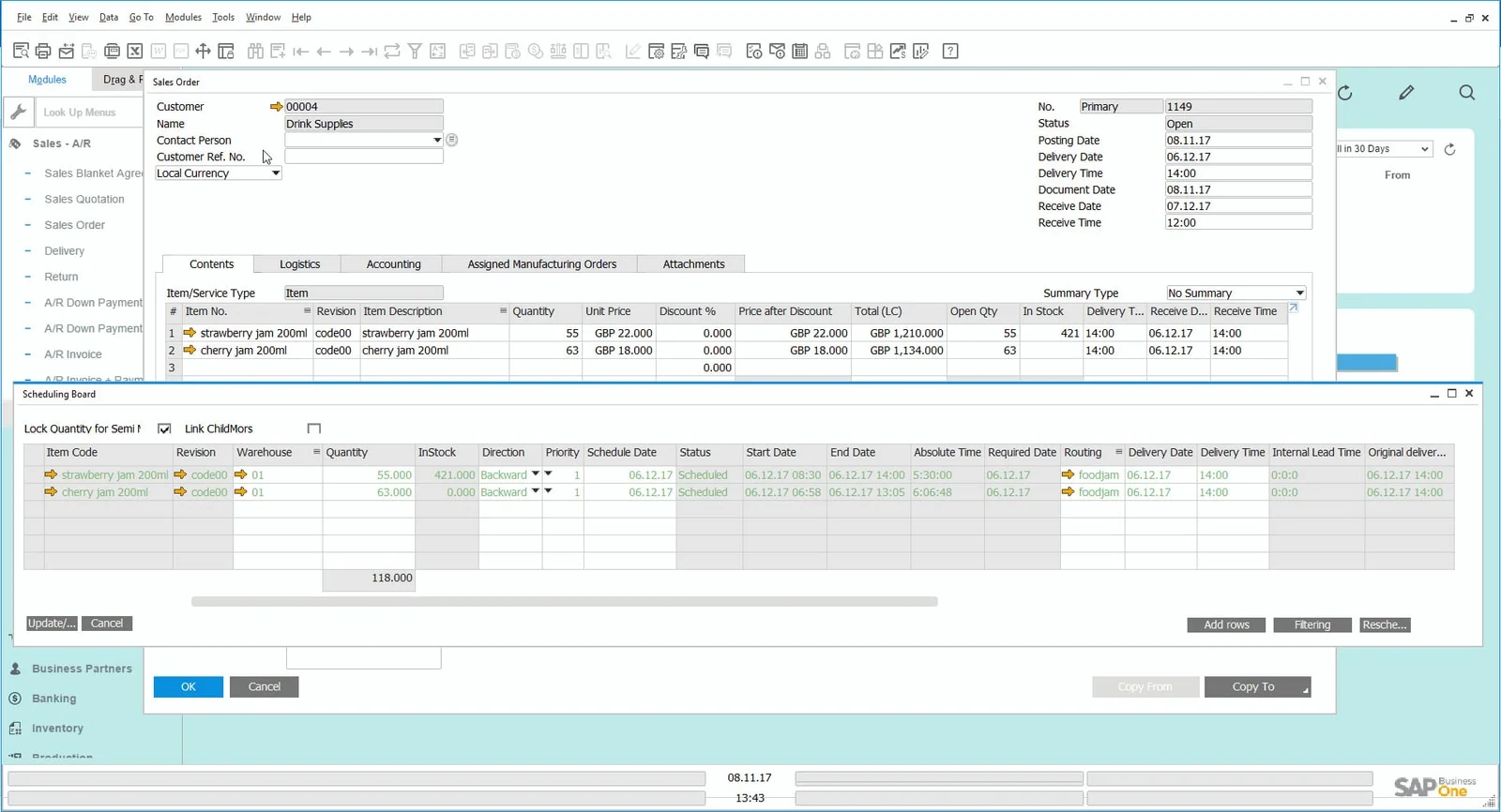
This function takes into consideration, among other things, resource capacity (based on a separate calendar defined for each resource) to give the salesperson information on feasible production opportunities, weighed up against customer expectations.
When a customer accepts a proposed shipping date, we can calculate shipping time backwards from it, using a range of time data in the process. The following diagram shows exactly what is taken into consideration:
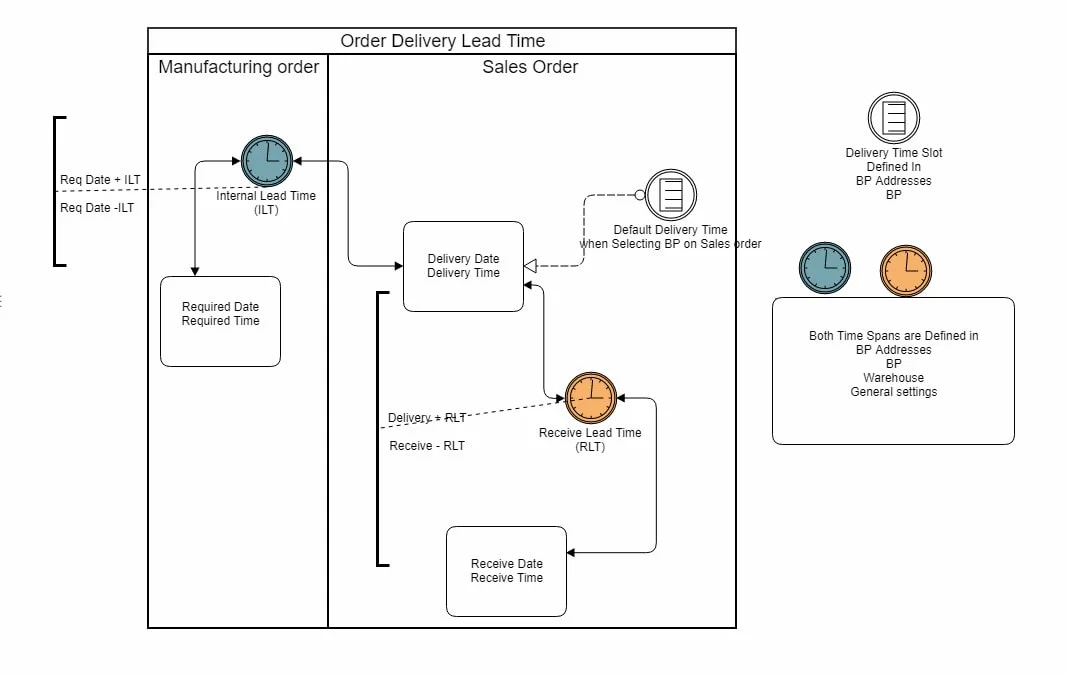
The elements in it are:
- Required Date, Time: the moment at which the production of items from a specific Manufacturing Order has to be completed to meet the customer’s expectations in terms of shipping date
- Internal Lead Time: the time period needed to prepare production results for shipping (sorting, assembling, packing, moving from the production floor to the shipping area, etc.). Required Date and Time + Internal Lead Time = Delivery Date and Time.
- Delivery Date, Time: the moment of sending output out of the company. Delivery Date and Time + Receive Lead Time = Receive Date and Time.
- Receive Lead Time: the time period between sending the output and the customer receiving it
- Receive Date, Time: the moment the customer receives the output
- Delivery Time Slot: the preferred delivery time, e.g., 5 pm
As you can see, the final shipping date is calculated based on a number of data elements. This allows the final shipping date to be determined accurately every time.
The second element of the whole process is the Manufacturing Order. The following screenshot shows an example Manufacturing Order with its dates already calculated from the information shown in the diagram above. Note that the production time is broken down into values for specific components.
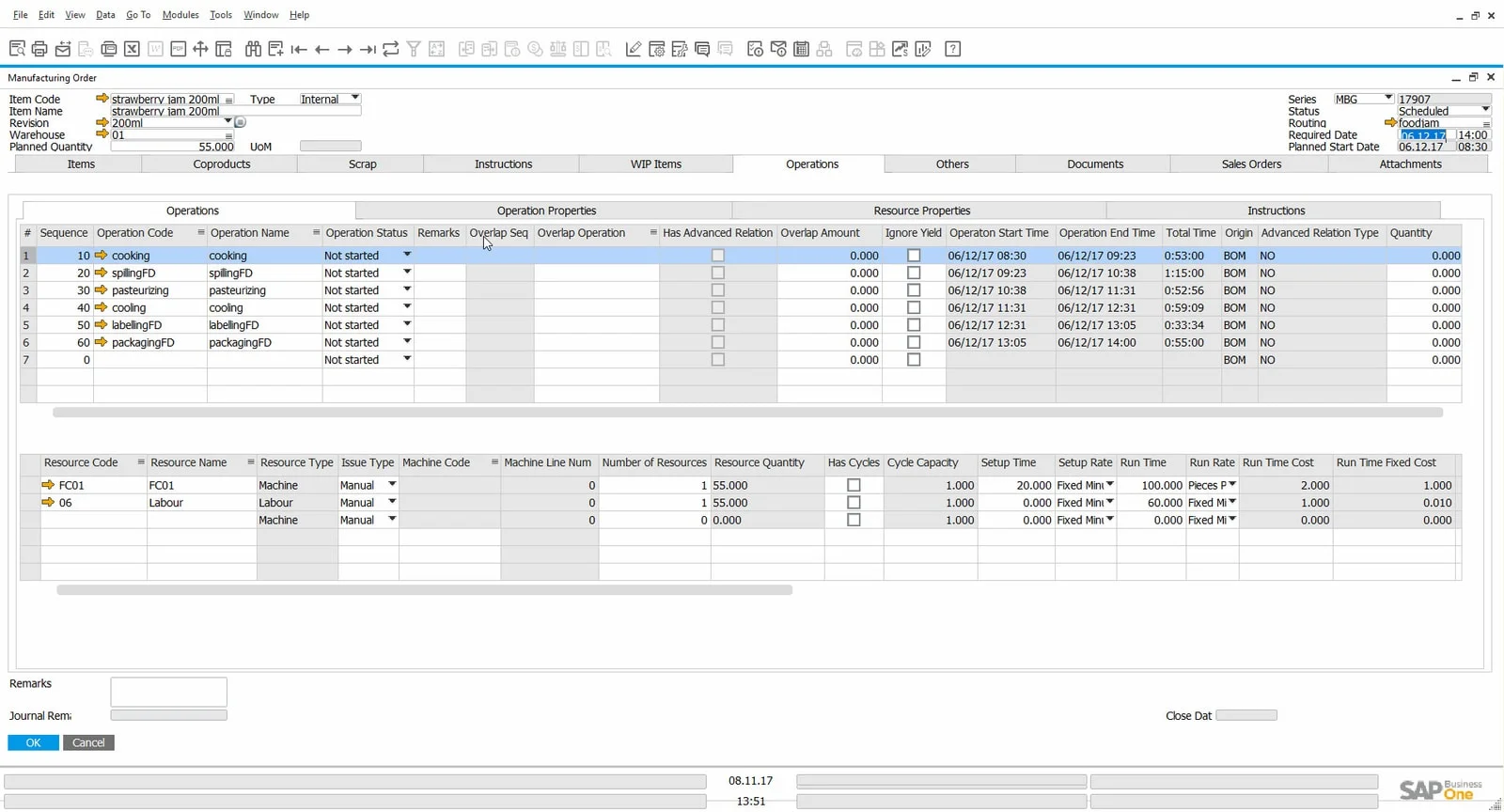
Scheduling Manufacturing Orders based on the dates required by the customer and on resource information allows you to evaluate production capabilities swiftly and react immediately (and effectively) to any unexpected obstacles, e.g., resource downtime. This function gives the salesperson a tool that supports direct contact with the customer and allows them to fit the new Manufacturing Order into the wider production plan. Therefore, it supports both customer service and the logistics process. Information gathered from a large number of Manufacturing Orders can also be used to create reports that help streamline the whole delivery process. This information also helps you to manage the delivery process by taking currently available slots in the company’s production plan into consideration.
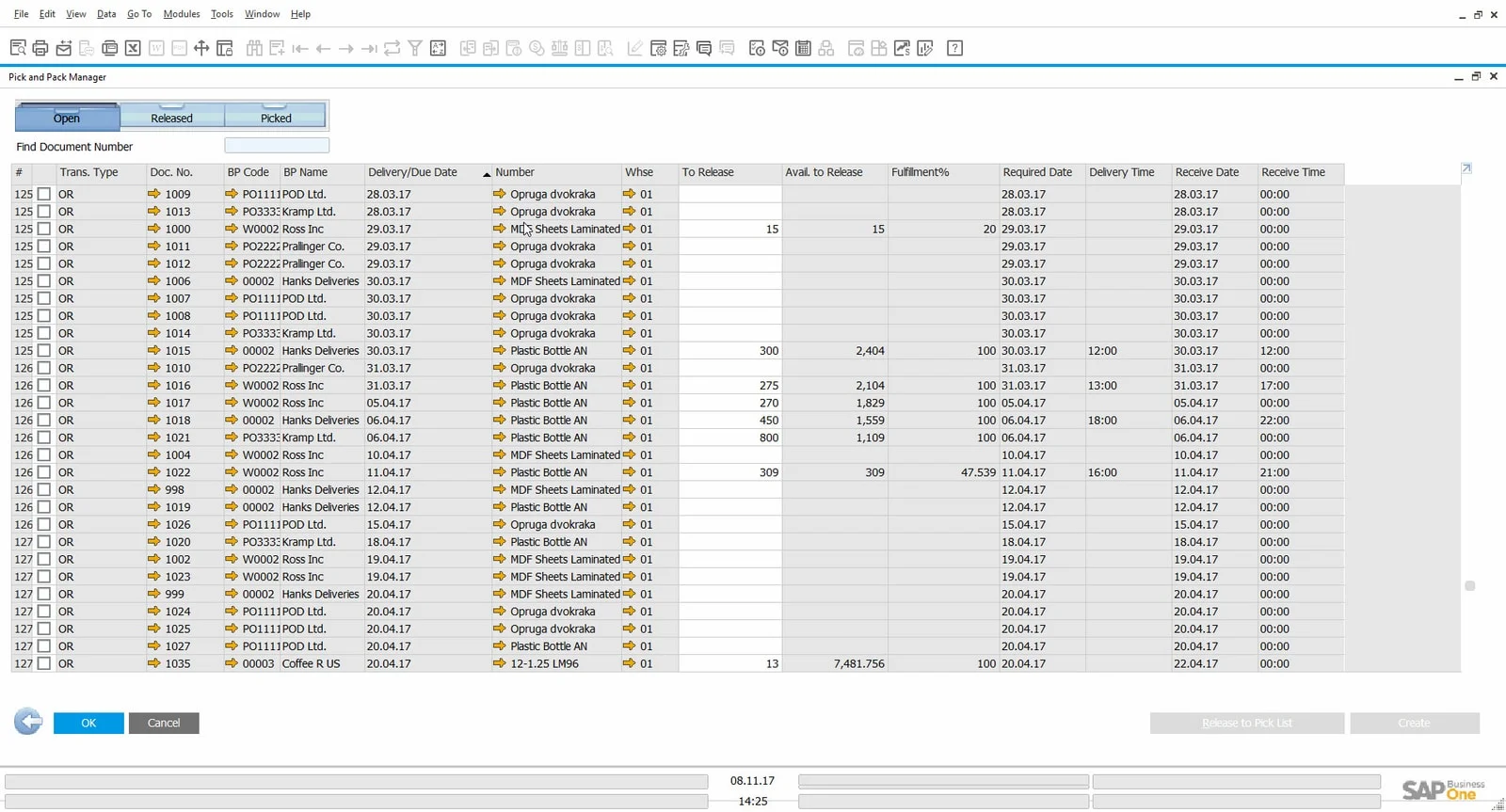
As we can see, all the elements described in this solution are not only a part of the sales process, but also contribute strongly to production scheduling and allow you to plan deliveries accurately. The main factor in the whole process is managing the internal time, during which all the production operations take place. Production, delivery assembly, and packaging are crucial for shipping ordered goods on time. To further improve and speed up the whole process, we can use the CompuTec WMS solution. It allows your employees to operate logistics processes from the shop floor using mobile devices.
Logistics is just one of the aspects of production. To schedule the manufacturing process properly, we need to obtain, integrate, and use data on the operations that have to be performed, their time, and their costs, among other pieces of information. As we can see, we can handle all this using the combined functionalities of SAP Business One and CompuTec ProcessForce. Not only can we manage complex production processes, but also all the connected logistics activities. A common approach to this subject is to treat production and product logistics separately. But why not unify them (and simplify the process), if we can do so using a compact solution?