Within our daily diet, we should be aware of the amount of fat we are eating, both good and bad. But for the dairy industry, fat is good, and the more they get, the higher the production yields of products such as cream and cheese.
As a consequence of making cheese, cream is also produced, which can be sold as a product in its own right or used in a further production process to make ice cream. And of course, the more cream you add, the richer and better it tastes, and the more expensive it is!
In a previous blog post, “Fat, Strength and Potency,” we reviewed the concept of how the active ingredient can affect the recipe, which in this example is the milk, with the percentage value being the fat content.
During different times of the year, the quality of the grass will provide a higher or lower fat content, but from a recipe perspective, the cheese company will normally use a nominal value, or may have two revisions for the same recipe, one for winter and the other for summer. But the issue here is slightly different from potency or strength, as just adding more milk doesn’t change the fat content. A new ingredient has to be added to increase the percentage, and this would be the produced cream.
From an ERP perspective, the solution needs to manage the following:
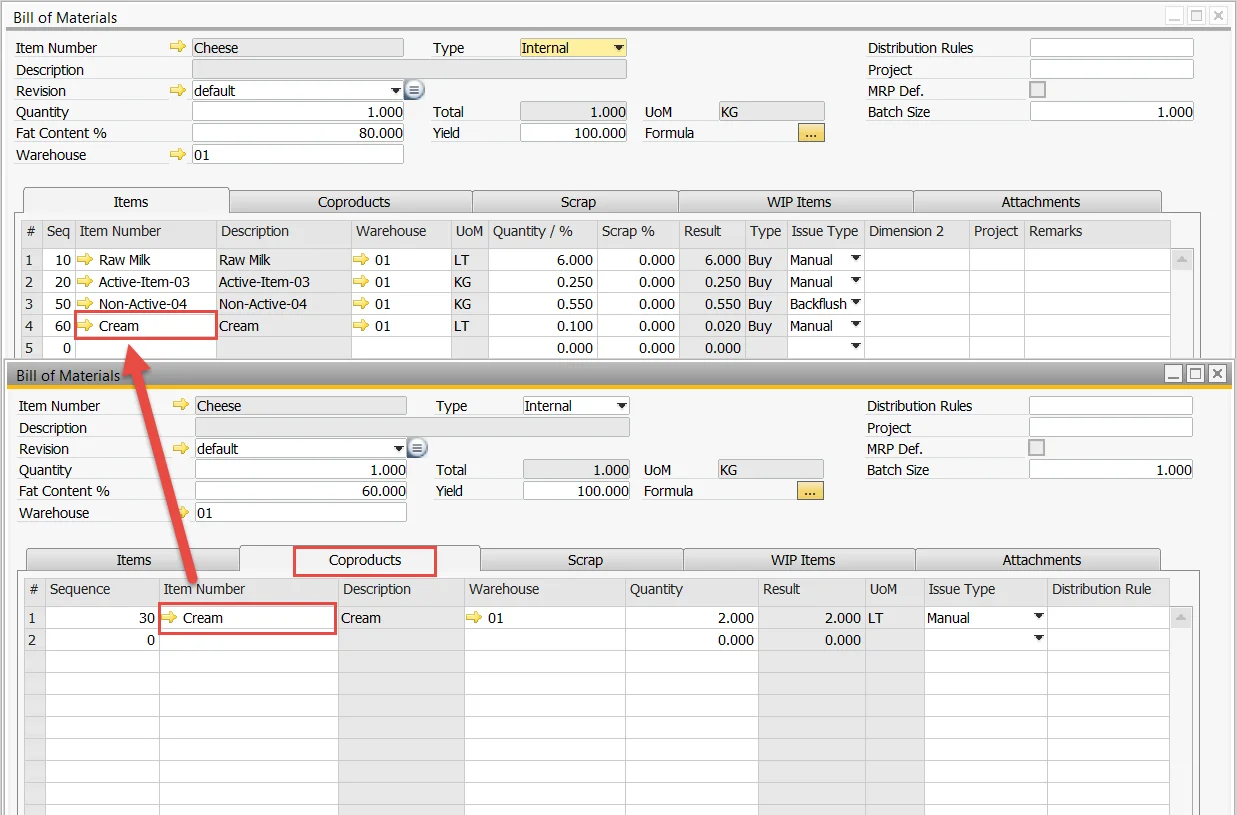
- CoProduct Production: the primary product being the cheese and the coproduct cream
- CoProduct Consumption: the cream will be a consumed ingredient within the recipe
- Percentage Factor: to represent the milk fat percentage
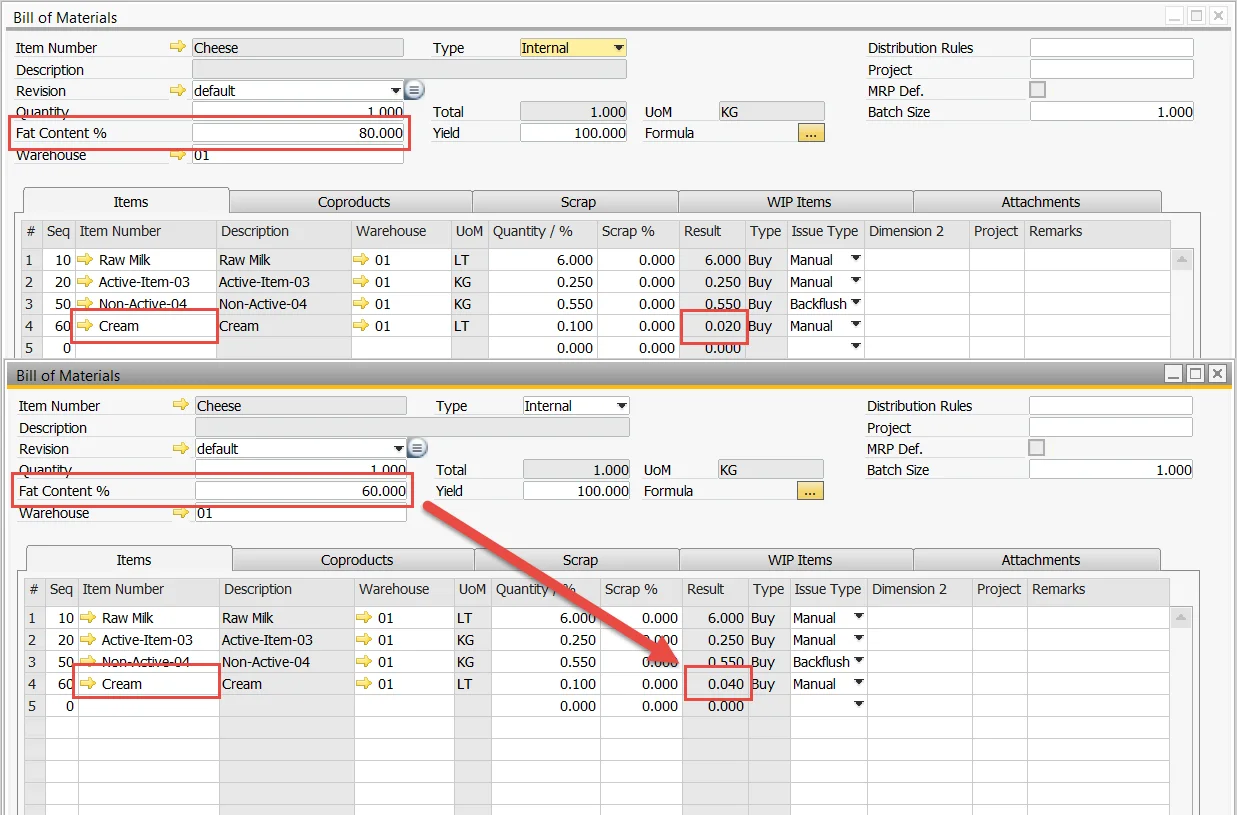
The example below illustrates the recipe relationships for the ingredients, coproducts, and the nominal milk fat percentage.
When the nominal milk fat percentage changes, the amount of required cream also changes.